Why trust this guide: Written by the ICM Wellness team. ICM Wellness products are crafted by naturopath Dr. Ben-Yisrael. We make and drink sole ourselves, and we check every claim against published nutrition data. We state sodium figures plainly, skip the miracle promises, and say clearly when a doctor should be involved. Last reviewed: October 2026.
Quick summary: Sole water is a simple mix of salt and water, but the details decide whether it helps or hurts. This guide covers what sole water is, which salt to use, the right ratio, the real benefits and the hype. We also share honest sodium numbers, a morning routine that works, and who should check with a doctor before trying it.
Sole water is one of the simplest wellness habits around, and also one of the most misunderstood. So what is sole water, really? It is salt dissolved in water until the water can’t hold any more. Then a small spoonful of that brine goes into a glass of plain water, and you drink it.
That’s the whole drink. But the online claims around it are much bigger than the glass. Some posts say it cures fatigue, balances hormones and flushes out toxins. We don’t believe that, and we won’t pretend otherwise.
We have kept a jar of sole in our own kitchen for years. When we tracked it closely over six weeks, the results were modest but real. We felt steadier on hot, sweaty days and found it easier to drink water first thing. Nothing more dramatic than that.
So this guide sticks to what we’ve seen and what the research supports. We’ll cover what sole is, how to make it, which salt to pick and how much is too much. We’ll also share the parts that rarely make it onto social media.
What Is Sole Water?

So, what is sole water in plain terms? It is a saturated salt solution. That means the water holds the most salt it possibly can. Once it reaches that point, any extra salt just sits at the bottom of the jar.
The word “solé” is pronounced “so-lay.” It comes from the Latin word sol, meaning sun. Fans of the drink like to call it “sun-charged water,” which sounds lovely but isn’t a scientific term. The idea spread widely through a German book on water and salt in the early 2000s. It has stayed popular ever since, and it got a second wave of attention on social media in recent years.
Most people make it with pink Himalayan salt. In fact, “himalayan salt sole” is how many people first hear about it. However, the method works with any unrefined salt. The key is the saturation, not a special ingredient.
It also helps to know what sole is not. It isn’t a supplement, a medicine or a detox. It’s a convenient way to measure out salt in a steady, predictable amount. Once you see it that way, the rest of this guide makes a lot more sense.
Sole Water vs Regular Salt Water
Regular salt water is just a pinch of salt stirred into a glass. The amount changes every time you make it. One day you add a little, and the next day a lot more. As a result, you never really know how much sodium you’re drinking.
Sole fixes that problem. Because the brine is always fully saturated, every teaspoon holds about the same amount of salt. So you get a steady, repeatable dose each morning. That consistency is the main thing that sets it apart.
There’s a second difference too. Regular salt water is made fresh and drunk right away. Sole is a concentrate. You make one jar, and it lasts for weeks.
And there’s a small practical bonus. Fully dissolved salt mixes into water instantly, with no gritty crystals at the bottom of the glass. That makes the drink smoother and easier to sip, which matters more than you’d think on a busy morning.
Which Salt to Use (Himalayan vs Celtic)

Pink Himalayan salt is the classic choice. It comes from ancient salt deposits in Pakistan. Its pink color comes from small amounts of iron oxide. It tastes clean and mild, and it dissolves slowly into a clear brine.
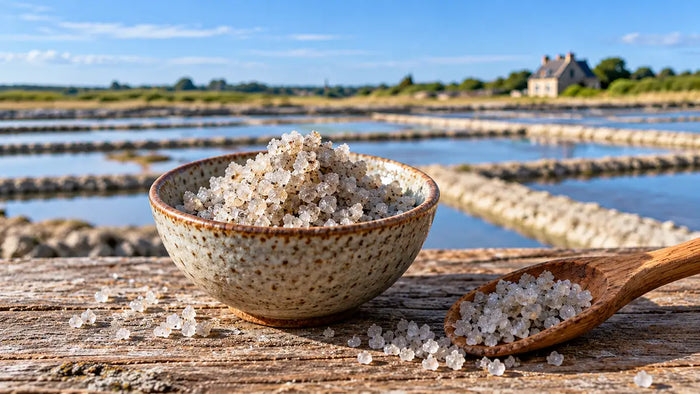
Celtic sea salt is the other popular option. It’s harvested from coastal salt marshes in France. It is grey, a little damp, and has a softer, briny taste. Some people find it easier to drink because it tastes less sharp.
Both salts are about 98% sodium chloride. Similarly, both carry small amounts of other minerals. So the honest answer is simple: pick the one you enjoy and can afford.
A few buying tips help, though. Choose coarse crystals or rocks, since they dissolve evenly and make a clear brine. Skip iodized table salt and anything with anti-caking agents, because those additives can cloud the jar. And buy from a brand that shares where its salt comes from. For a full side-by-side, read our guide to Celtic salt vs Himalayan salt.
How to Make Sole Water

Making sole takes two minutes of work and one day of waiting. Here is the short version:
- Fill a clean glass jar about one quarter full with coarse pink Himalayan salt or Celtic sea salt.
- Top it up with filtered water and close it with a plastic or glass lid. Metal lids corrode.
- Leave it for 12 to 24 hours.
- Check that some salt is still sitting at the bottom. If it all dissolved, add more salt. Undissolved crystals tell you the brine is fully saturated.
The sole water ratio for drinking is the part people get wrong most often. We use one teaspoon of brine in a glass of water, about 8 ounces (240 ml). Start with half a teaspoon for the first week. And treat one teaspoon as your ceiling, not your starting point.
Use a plastic, wooden or ceramic spoon to scoop it out. Salt brine is harsh on metal over time. Store the jar at room temperature, out of direct sun. Salt is a natural preservative, so the brine keeps for weeks.
Keep topping up the salt and water as you use it. As long as you can see crystals at the bottom, your brine stays at full strength. For photos, troubleshooting and storage tips, see our full sole water recipe.
Shop Solé: Ready-Made Sole Water
Sole Water Benefits: What the Evidence Really Says
Let’s be upfront. Very few studies look at sole itself. Most of what we know comes from research on sodium, hydration and salt in general. So when we talk about sole water benefits, we stick to what that research supports.
The good news is that some of the benefits of sole water are real and practical. Others are wildly overstated. Below, we sort one from the other.
We also want to be clear about who benefits most. Active people, heavy sweaters and anyone who struggles to drink enough water will notice the most. If you already eat a salty diet and rarely sweat, the gains will be small. For a deeper dive into each claim, read our full breakdown of sole water benefits.
Hydration and Electrolytes
Sodium is one of the body’s main natural electrolytes. It helps your body hold on to water and move it where it’s needed. Plain water sometimes passes through quickly, especially when you drink a lot at once. A little sodium can help your body keep more of it.
This is why oral rehydration drinks always contain salt. Sole works on the same basic idea, just in a much simpler form. A morning glass can be a gentle start to daily hydration, especially after a long night without water.
There’s a habit effect too. Many people simply drink more when the water has a little taste to it. And a full glass first thing sets the tone for the rest of the day.
However, sole is not a complete electrolyte drink. It has lots of sodium, but very little potassium and almost no magnesium. If you need full electrolyte support, you need other sources too. We cover those in our natural electrolyte drink recipes.
Replacing Salt Lost Through Sweat

This is where sole earns its place. When you sweat, you lose both water and salt. On average, sweat holds roughly 900 to 1,000 mg of sodium per liter. However, that number varies a lot from person to person.
Picture a long run, a hot afternoon of yard work or a sauna session. You might sweat out a liter or more in an hour. Drinking only plain water after that can leave you feeling flat, crampy or light-headed. A glass of sole helps put some of that salt back.
Here’s a quick way to tell if you’re a salty sweater. Look for white streaks on your hat or shirt after a workout. Notice if sweat stings your eyes or tastes very salty. If so, you likely lose more sodium than average and may feel the difference more.
We notice it most in summer. After a sweaty morning, a glass of sole water with lunch feels far better than water alone. But if you sit at a desk all day, you probably get plenty of salt from food already.
Trace Minerals in Sole Water Himalayan Salt (What’s Real and What’s Hype)
You’ll often read that pink salt holds 84 trace minerals. Yes, those minerals are there. But they are tiny. Together, they measure in fractions of a percent, while the rest is ordinary sodium chloride.
To put it in perspective, a full glass of sole gives you less magnesium than a few spinach leaves. An Australian study published in 2020 tested pink salts sold in stores. The researchers found you’d need about 30 grams of pink salt a day to get a meaningful boost in minerals. That’s around six teaspoons of salt, which would be a dangerous amount of sodium.
The same study raised another point. A few samples contained traces of heavy metals, including one above the local safety limit. That’s a good reason to buy from a brand you trust and not the cheapest bag online.
So, here’s our honest take. Drink sole for the sodium and the hydration habit. Don’t drink it for the minerals. For those, eat leafy greens, nuts, seeds, beans and fruit.
A Simple Morning Routine With Sole Water

Many people enjoy sole most as part of a morning wellness routine. It’s quick, cheap and easy to remember. Above all, it gives you a reason to drink a full glass of water before coffee.
Here’s the routine we use:
- Wake up and fill a glass with 8 ounces of room-temperature water.
- Stir in half to one teaspoon of sole.
- Add a squeeze of lemon if you like the taste.
- Drink it slowly over a few minutes, then wait about 15 minutes before coffee or breakfast.
A few small tricks keep the habit going. Keep the jar and a glass next to the kettle so you see them every morning. Pair the drink with something you already do, like letting the dog out or checking the weather. After a couple of weeks, it starts to feel automatic.
Will this change your life?
Probably not. But small habits like this one make it easier to stay hydrated through the day. For more ideas to build around it, read our guide to drinking salt water in the morning.
Sole Water vs Himalayan Salt Water vs Electrolyte Drinks
People often ask us which option is best. The answer depends on your day. Someone who sits at a desk needs something very different from someone training for a marathon. This table compares the three most common choices.
| Sole Water | Himalayan Salt Water | Electrolyte Drinks | |
|---|---|---|---|
| What it is | 1 tsp of saturated brine in 8 oz water | A pinch of salt stirred into water | Ready-made powder, tablet or bottle |
| Sodium per serving | About 500 to 600 mg | Varies, often 150 to 600 mg | Usually 200 to 1,000 mg |
| Potassium and magnesium | Trace amounts only | Trace amounts only | Often added in useful amounts |
| Sugar | None | None | 0 to 35 g, depending on brand |
| Dose consistency | Steady every time | Changes every time | Steady, printed on the label |
| Cost per serving | A few cents | A few cents | About $0.50 to $2.50 |
| Best for | A simple daily habit | A quick one-off fix | Long, hard or hot workouts |
In short, sole wins on cost and simplicity. Electrolyte drinks win when you sweat heavily and need potassium too. Meanwhile, plain salt water is fine in a pinch, but it’s hard to dose well.
Many people end up using more than one. We drink sole most mornings and reach for a full electrolyte mix only on long, hot training days. That mix keeps costs low and avoids the sugar in many sports drinks.
For more on the first two, read our guide to Himalayan pink salt water. And for a full look at electrolyte options, see our guide to natural electrolyte drink recipes.
Sole Water Side Effects & Safety
This is the section most guides rush through. We think it matters most. Sole is safe for most healthy adults in small amounts. But it is still salt, and salt adds up quickly.
How Much Sodium Is in Sole Water?
A fully saturated brine holds about 26% salt by weight. So one teaspoon of sole carries roughly 500 to 600 mg of sodium. The exact number depends on your salt and how saturated your jar is.
For comparison, one teaspoon of dry table salt holds about 2,300 mg of sodium. The Dietary Guidelines for Americans set 2,300 mg a day as the upper limit for most adults. The American Heart Association suggests an ideal of 1,500 mg for many people. As a result, one teaspoon of sole uses up about a quarter of a day’s limit.
Most American adults already eat around 3,400 mg of sodium a day. Bread, cheese, soups and takeaway food carry most of it. So if your diet is already salty, a daily glass can push your sodium intake even higher. Keep an eye on your total, not just the glass.
Common Side Effects
Too much sole usually shows up in simple ways. Watch for:
- Feeling extra thirsty or bloated
- Puffy hands, feet or ankles
- Headaches
- Loose stools or an upset stomach, which happens when the mix is too strong
If any of these show up, cut back to half a teaspoon or stop for a few days. Most of the time, the problem is simply too much brine in the glass. A healthy mineral balance comes from steady habits, not bigger doses.
One more tip: never drink the brine straight from the jar. Undiluted sole is extremely salty and can upset your stomach fast. It should always go into a full glass of water first.
Who Should Talk to a Doctor First
Please check with your doctor before trying sole if any of these apply to you:
- High blood pressure. Extra sodium can raise it further.
- Kidney disease. Your kidneys control sodium, and weak kidneys can struggle with more.
- Heart failure or other heart conditions. Salt can lead to fluid build-up.
- Pregnancy or breastfeeding. Your sodium and fluid needs change, so get advice that fits you.
- Low-sodium diets or certain medicines. This includes diuretics and some blood pressure drugs.
This guide is for general education only. It isn’t medical advice, and it can’t replace a talk with your doctor. If you’re unsure, ask first. For a closer look at the risks, read our guide to sole water side effects.
Ready-Made Sole Water
Making sole at home is easy. Still, not everyone wants a salt jar on the counter. Some people travel a lot. Others simply prefer to know the brine is mixed the same way every time.
That’s why we make a ready-to-use Solé natural salt mineral solution. It’s made from just two ingredients: unrefined natural salt and water. You add one teaspoon to 8 to 12 ounces of water, once a day, and that’s it.
If you shop around, read the label closely. A good ready-made sole should list only salt and water, with no added sugar, flavors or preservatives. It should also tell you clearly how much to use.
Either way, the same rules apply. Keep to one teaspoon a day and count it toward your sodium total. For a fair look at homemade versus ready-made, read our guide to ready-made sole water.
Frequently Asked Questions
What is sole water good for?
Sole water is good for gentle daily hydration and for replacing salt lost through sweat. Many people also like it as an easy morning habit that gets them drinking water early. However, it won’t detox your body or fix a mineral deficiency. The trace minerals are simply too small to matter.
How much sole water should you drink a day?
Most people do well with one teaspoon of sole in 8 ounces of water, once a day. Start with half a teaspoon for the first week and see how you feel. Don’t go beyond one teaspoon unless a doctor advises it, since that adds about 500 to 600 mg of sodium.
Can you drink sole water every day?
Yes, most healthy adults can drink it daily at one teaspoon or less. Just count it toward your total sodium for the day. If you have blood pressure, kidney or heart concerns, or you’re pregnant, ask your doctor first.
Does sole water break a fast?
No. Sole has no calories, sugar or protein, so it won’t break a fast in the usual sense. In fact, many people who fast use a little salt to ease headaches and tiredness. Just keep the dose small, since fasting can also change how your body handles fluid.
Conclusion
Sole water isn’t magic, and it doesn’t need to be. It is a simple, cheap way to add a little salt and a lot of water to your morning. For active people, sweaty summers and long fasts, that can be genuinely useful.
The trick is to keep it honest. Use one teaspoon at most and count the sodium. Enjoy the habit for what it is, not for the hype around trace minerals. And if you have a health condition, talk to your doctor before you start.