Why trust this recipe: Written by the ICM Wellness team. ICM Wellness products are crafted by naturopath Dr. Ben-Yisrael. We make sole in our own kitchen, and we check sodium figures against published nutrition data. We share the safe limits plainly and say when a doctor should be involved. Last reviewed: October 2026.
Quick summary: This sole water recipe shows how to turn salt and filtered water into a steady brine in four simple steps. We cover the tools, the saturation point, the safe 1 teaspoon per glass ratio and real sodium numbers. We also share the mistakes we see most and who should talk to a doctor before starting.
This sole water recipe takes two ingredients, one jar and about a day of waiting. Sole (say “so-lay”) is salt dissolved in water until the water can’t hold any more. A small spoonful then goes into a glass of plain water. The main benefit is a steady, measured pinch of salt in your morning glass, without guessing every time.
So why does a recipe for sole water matter at all?
Because the details decide whether it’s a gentle habit or a salty mistake. Too little salt and the brine is weak. Too much brine in the glass and you’re drinking far more sodium than you meant to.
Below, we walk through exactly how to make sole water at home. We also cover the ratio, the best salt and the mistakes we see most often. For the bigger picture on benefits and safety, see our complete sole water guide.
What You Need to Make Sole Water
Good news first. You don’t need special gear to make sole water. Most kitchens already have everything except, perhaps, the right salt.
Here is the full list:
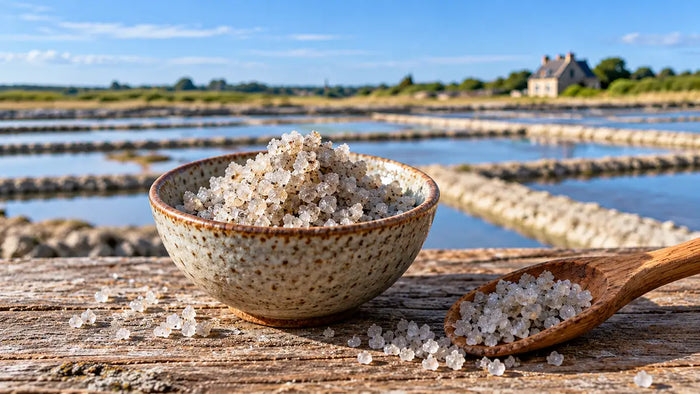
- Coarse salt crystals. Pink Himalayan salt or Celtic sea salt both work. Coarse rocks or chunky crystals dissolve evenly and give a clear brine.
- Filtered water. Tap water works, but filtered water tastes cleaner and keeps the jar clear.
- A glass jar with plastic lid. A 16-ounce (about 500 ml) mason jar is a good size for one person.
- A non-metal spoon. Plastic, wood or ceramic all work fine.
Why the fuss about metal? Salt brine is very corrosive. It slowly eats into metal lids and spoons, and rust can drip back into the jar. As a result, a metal lid can spoil a batch within a few weeks. A glass jar with plastic lid avoids the problem completely.
How to Make Sole Water Step by Step

Now for the fun part. This is our full salt brine recipe, broken into four easy steps. The hands-on time is about two minutes. After that, the jar does the work.
If you’ve ever searched “sole water how to make” and found ten different methods, don’t worry. They all boil down to these same four steps.
Step 1: Fill a Quarter of the Jar With Salt
Start with a clean, dry jar. Add coarse salt until it fills about one quarter of the jar. In a 16-ounce jar, that’s roughly half a cup of salt.
Don’t worry about being exact. The goal is simply more salt than the water can dissolve. That extra salt is what makes the brine reliable.
Step 2: Top Up With Filtered Water
Next, pour filtered water over the salt until the jar is nearly full. Leave about half an inch of space at the top. Then screw on the plastic lid.
Give the jar a gentle shake or stir with your non-metal spoon. You’ll see the water turn cloudy at first. That’s normal, and it clears as the salt settles.
Step 3: Wait 12-24 Hours
Now, leave the jar alone on the counter, out of direct sun. Salt dissolves slowly in cool water, so it needs time. Most batches are ready overnight, though large rocks can take a full day.
Meanwhile, resist the urge to keep shaking it. One stir at the start is plenty. After that, patience does the job.
Step 4: Check the Saturation Point
This is the step that makes it a true sole water recipe. Look at the bottom of the jar. If you still see undissolved salt, the water has reached its saturation point. It can’t hold any more salt, so your sole is ready.
But if all the salt has vanished, the brine isn’t full strength yet. Simply add another spoonful of salt, wait a few more hours and check again. In short: leftover crystals mean ready. No crystals means add more salt.
The Right Sole Water Ratio (How Much to Use)

Here’s where people go wrong most often. Sole is a concentrate, not a drink. So you never sip it straight from the jar.
Our rule is simple: 1 teaspoon per glass of water, at most once a day. A glass means about 8 ounces (240 ml). Most importantly, start with a quarter or half teaspoon for the first week and see how you feel.
Why so careful? A fully saturated brine holds about 26% salt by weight. As a result, one teaspoon of sole carries roughly 500 to 600 mg of sodium. The FDA puts the daily limit at 2,300 mg for most adults, and the American Heart Association suggests an ideal of 1,500 mg for many people.
| Sole Concentrate | Plain Water | Approx. Sodium Per Serving | Best For |
|---|---|---|---|
| 1/4 teaspoon | 8 oz (240 ml) | 125 to 150 mg | Your first few days |
| 1/2 teaspoon | 8 oz (240 ml) | 250 to 300 mg | Most daily use |
| 1 teaspoon | 8 oz (240 ml) | 500 to 600 mg | The daily maximum |
| 1 teaspoon dry table salt (for comparison) | none | about 2,300 mg | A full day’s limit in one spoon |
So even the maximum dose uses up about a quarter of a day’s sodium limit. Keep that in mind if your meals are already salty. And if you have high blood pressure, kidney or heart problems, or you’re pregnant, please talk to your doctor before you start. For more on the risks, read our guide to sole water side effects.
A quick note on expectations. Sole has long been used as a traditional morning ritual, and many people enjoy it as a simple hydration recipe. However, it isn’t a treatment for any condition. Think of it as a habit, not a remedy.
Shop Solé: Ready-Made Sole Water
Which Salt Works Best?

Most people use pink Himalayan salt. Celtic sea salt is the other favorite. Both are about 98% sodium chloride, so they behave almost the same in the jar.
Pink Himalayan salt sole water tastes clean and mild, with a faint pink tint. Celtic salt gives a softer, more “ocean” flavor and a slightly grey brine. Pick whichever you enjoy drinking.
You’ll often hear that pink salt is packed with minerals. To clarify, those trace minerals are real but tiny. A 2020 study in the journal Foods found you’d need about 30 grams of pink salt a day to get a meaningful mineral boost. That’s far too much sodium. So make sole for the habit, not as mineral water at home. For a full side-by-side, read our guide to Celtic salt vs Himalayan salt.
Common Sole Water Recipe Mistakes
Even a simple recipe has a few traps. Here are the ones we see most:
- Using table salt. Iodized salt often contains anti-caking agents. They can cloud the brine and leave an odd taste.
- Using a metal lid or spoon. The brine corrodes metal, and rust can end up in your jar.
- Skipping the saturation check. No leftover crystals means a weaker brine and an unknown dose.
- Drinking it straight. Undiluted sole is extremely salty and can upset your stomach fast.
- Using too much. More is not better. Stick to 1 teaspoon per glass, at most.
- Letting the jar run low on salt. Always top up with salt when you add water.
Avoid these, and you’ll make sole water that tastes the same, batch after batch. It also becomes a much easier kitchen wellness ritual to keep up.
Don’t Want to Wait 24 Hours? Ready-Made Sole Water
Homemade sole is cheap and easy. Still, not everyone has a spare jar or a day to wait. Some people travel often. Others simply want the same strength every time without checking crystals.
That’s why we offer ready-made sole water. It’s made from just natural salt and water. Add one teaspoon to 8 to 12 ounces of water, once a day.
Either way, the same rules apply. Keep the dose small and count it toward your daily sodium.
Frequently Asked Questions
How long does homemade sole water last?
Sole keeps for weeks, even months, at room temperature. Salt is a natural preservative, so just keep the lid closed and top up regularly.
Can I use table salt to make sole water?
We don’t recommend it. Table salt often contains anti-caking agents and iodine that cloud the brine. Coarse, unrefined salt works much better.
Should sole water be refrigerated?
No, a cool cupboard is fine. In fact, cold slows dissolving, so a room-temperature jar stays fully saturated more easily than a fridge.
How much sole water should I drink a day?
Use no more than 1 teaspoon per glass, once a day. Start with a quarter or half teaspoon. Ask your doctor if unsure.
Is this sole water recipe the same as homemade electrolyte water?
Not quite. Sole gives you sodium but very little potassium or magnesium. A full homemade electrolyte water usually adds other ingredients too.
Conclusion
This sole water recipe is about as simple as kitchen projects get. Salt, filtered water, a glass jar and a day of patience. Check for crystals at the bottom, and you know your brine is ready.
The real skill is in the dose. Keep to 1 teaspoon per glass at most, count the sodium, and talk to your doctor if you have a health condition. Done that way, sole becomes a calm, easy start to the day.
So grab a jar tonight and give it a try. And if you’d like the full story on benefits, risks and choosing salt, our complete sole water guide covers it all.