Why trust this guide: Written by the ICM Wellness team. ICM Wellness products are crafted by naturopath Dr. Ben-Yisrael. We check every claim against peer-reviewed research and official nutrition data, and we say plainly when the evidence is thin. We also share real sodium numbers and flag when a doctor should be involved. Last reviewed: October 2026.
Quick summary: Celtic salt water has become a popular way to start the day, but how much does it really offer? This guide explains what makes grey sea salt different, which benefits hold up and how it compares with Himalayan salt. We also share a simple recipe, real sodium numbers and clear advice on who should skip it.
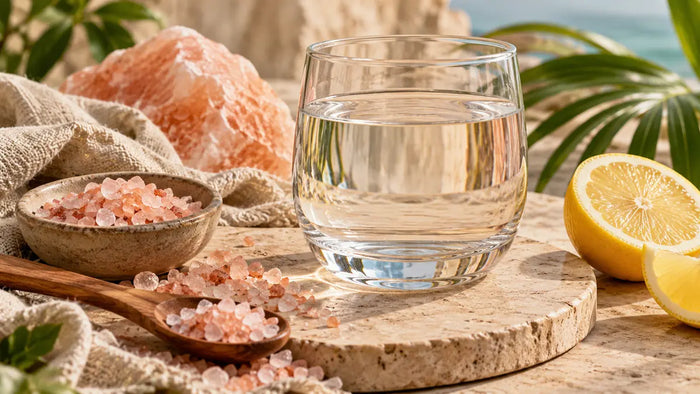
Celtic salt water is a small pinch of Celtic sea salt stirred into a glass of plain water. It matters because more people now drink it daily, often hoping for minerals and better hydration. The main benefit is simple: a little sodium can help your body hold on to the water you drink, especially after sweating.
But many claims online go much further than that. So in this guide, we look at what the salt really is, what it can and can’t do, and how to use it safely.
What Is Celtic Salt Water?

Celtic sea salt comes from coastal salt marshes, mainly in Brittany, France. Seawater flows into shallow clay-lined ponds, and the sun and wind slowly dry it out. Workers then rake the salt by hand.
It is an unrefined salt, which means it isn’t washed, bleached or heavily processed. Many people like that. Still, it is mostly sodium chloride, just like other salts.
To make the drink, people stir a pinch into water and sip it, often in the morning. Some add lemon for taste.
Why Celtic Sea Salt Is Grey and Damp
Celtic salt is often called grey sea salt. The color comes from the clay and minerals at the bottom of the ponds. It isn’t a sign of dirt.
It also feels damp to the touch. The moisture content of salt like this is higher than in dry table salt, because it isn’t fully dried. As a result, a spoonful holds a little less actual salt by weight, which slightly lowers the sodium per spoon.
Celtic Salt Water Benefits: What Holds Up
Few studies test this drink directly. Most of what we know comes from research on sodium, fluids and exercise. So we stick to what that wider research supports.
The real benefits of drinking celtic salt water are modest. They help most on hot days, after sweaty workouts or when you struggle to drink enough.
Salt for Hydration
Sodium helps your body keep water in the bloodstream instead of passing it straight through. That’s why oral rehydration drinks always contain salt. A pinch can help a glass of water go a little further.
A 2016 study in the American Journal of Clinical Nutrition compared how well different drinks kept people hydrated (Maughan et al., 2016). Drinks with more sodium stayed in the body longer than plain water. So using salt for hydration has a real basis, as long as the dose stays small.
Magnesium in Sea Salt: Small but Real
Celtic salt is known for its magnesium. In fact, it often carries more magnesium than refined salt, which some people say gives it a softer, slightly bitter taste.
The amounts are still small, though. A pinch in water gives only a few milligrams, while adults need roughly 310 to 420 mg of magnesium a day, according to the NIH Office of Dietary Supplements. One ounce of almonds gives about 80 mg, so food does far more.
Celtic Salt vs Himalayan Salt

This is one of the most common questions we hear. Both are natural salts, and both are about the same chemically. The differences come down to source, texture and taste.
Here’s a quick salt comparison:
| Feature | Celtic Sea Salt | Himalayan Pink Salt | Iodized Table Salt |
|---|---|---|---|
| Source | Evaporated seawater, France | Ancient rock salt, Pakistan | Mined or sea salt, refined |
| Color and texture | Grey, damp, coarse | Pink, dry, hard crystals | White, dry, fine |
| Approx. sodium per 1/4 tsp | About 450 to 550 mg | About 500 to 600 mg | About 575 mg |
| Iodine | Very little | Very little | Added |
| Taste | Soft and briny | Clean and mild | Sharp |
| Best use | Those who like a softer taste | Most people starting out | Anyone low on iodine |
The mineral content of salts does vary. A 2020 study of pink salts found that you’d need more than 30 grams a day to get a meaningful mineral boost (Fayet-Moore et al., 2020). The same logic applies to Celtic salt, because both are mostly sodium chloride.
Sea Salt vs Rock Salt
Sea salt comes from evaporated seawater. Rock salt, like Himalayan salt, is mined from old underground deposits. Both can work well in water.
There’s one point worth knowing. A 2018 study found tiny plastic particles in many sea salts sold around the world, while rock salts tended to have fewer (Kim et al., 2018). The amounts are small, but it’s a fair thing to weigh when choosing natural salt.
Our Celtic Salt Water Recipe

This recipe makes one glass:
- Pour 8 to 12 ounces (240 to 350 ml) of filtered water into a glass.
- Add 1/8 teaspoon of fine Celtic sea salt. Never go above 1/4 teaspoon.
- Stir well, since damp salt can take a little longer to dissolve.
- Sip it slowly, ideally in the morning or after a sweaty workout.
It should taste only lightly salty. If it tastes like seawater, pour some out and top it up with plain water.
A squeeze of lemon softens the taste. However, lemon is acidic, so rinse your mouth with plain water afterward. For a steady dose every day, some people prefer sole, a fully saturated brine. Our full method is in our sole water recipe.
Shop Solé: Ready-Made Sole Water
Limits and Safety
A quarter teaspoon of Celtic salt still holds roughly 450 to 550 mg of sodium. The FDA sets 2,300 mg a day as the limit for most adults. Meanwhile, the American Heart Association suggests an ideal of 1,500 mg for many people.
Most adults already get plenty of sodium from food. So a daily glass should count toward your total. Celtic salt is also not iodized, so make sure you get iodine from foods like dairy, eggs or seafood.
Please talk to your doctor before drinking celtic salt water if you have high blood pressure, kidney disease or heart problems. The same goes for anyone pregnant, on a low-sodium diet or taking diuretics. Celtic salt has a long folk tradition as part of a simple daily ritual, but it isn’t a treatment for any condition.
Tips for Choosing Natural Salt
A few simple checks help you pick a good Celtic salt:
- Look for “unrefined” on the label, with no added anti-caking agents.
- Choose a brand that names where its salt comes from.
- Pick fine grains for drinking, since coarse damp crystals dissolve slowly.
- Store it in a sealed glass or ceramic jar to manage the moisture.
One common mistake is using too much because the taste feels softer. The sodium is still there, so keep the pinch small.
Frequently Asked Questions
What are the real celtic salt water benefits?
The main benefits are gentle hydration and replacing salt lost through sweat. Claims about large mineral boosts or detox lack good evidence.
Is Celtic salt healthier than Himalayan salt?
Not really. Both are mostly sodium chloride with tiny mineral amounts. Pick the one you enjoy, and keep the dose small.
How much Celtic salt should I put in water?
Start with 1/8 teaspoon in 8 to 12 ounces of water. Never use more than 1/4 teaspoon per glass, once a day.
Can Celtic salt help with weight loss?
No. There’s no evidence it burns fat. Extra sodium can make your body hold water, so the scale may even rise.
Why is my Celtic salt wet?
That’s normal. Celtic salt isn’t fully dried after harvest, so it holds natural moisture. Store it sealed to keep it fresh.
Conclusion
Celtic salt water is a simple, gentle habit, not a cure-all. A small pinch can help your water go further on hot days and after workouts. However, its minerals are too small to replace a good diet.
Keep the dose small, count the sodium and talk to your doctor if you have a health condition. Used that way, Celtic salt can earn a small, honest place in your day. For more on salt drinks, read our complete sole water guide.